COMPLETE AND FULL DENTURES MEAN THE SAME THING
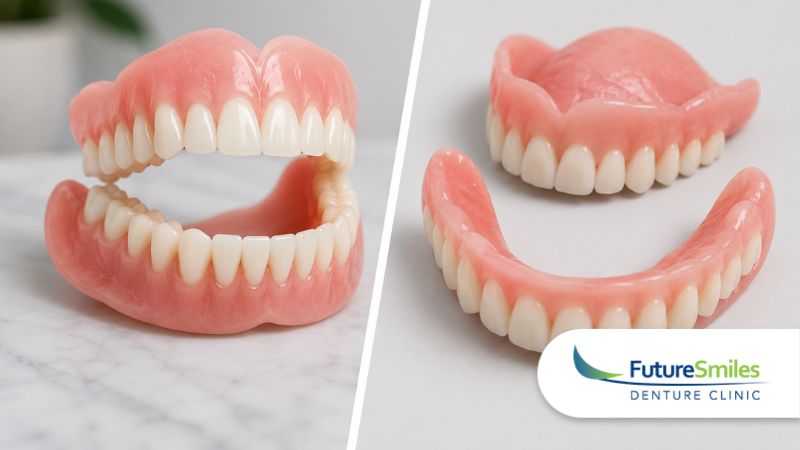
Complete dentures and full dentures generally refer to the same type of tooth replacement. Both terms describe a removable denture made to replace all natural teeth in one dental arch. A patient may need an upper denture, a lower denture, or a complete set for both arches.
The word “complete” refers to the fact that the denture replaces a complete arch of teeth. The word “full” communicates the same idea in more familiar language. A denturist may use either term depending on the conversation, treatment plan, or information being provided.
This differs from a partial denture, which is designed for someone who still has several healthy natural teeth. Partial dentures fill selected spaces and are supported partly by the teeth that remain. Complete dentures are used when no natural teeth remain within the treated arch or when the remaining teeth must be removed because they can no longer be maintained.
Although the terminology is interchangeable, complete dentures are not identical for every patient. Each appliance must be designed around the individual shape of the mouth, gums, jaw, bite, and facial features. Differences in materials, tooth shapes, gum shades, and construction methods can also influence the final appearance and feel.
This is why two patients receiving full dentures may have very different treatment plans. One may need only an upper appliance, while another may require both upper and lower dentures. One person may receive immediate dentures after extractions, while another may begin treatment after the gums have healed.
The most important distinction is not between “complete” and “full.” It is between the different treatment approaches available within the complete denture category.
THE DIFFERENT TYPES OF FULL DENTURES
Traditional complete dentures are created after the gums have healed following tooth removal. Waiting for healing can provide a more stable foundation for impressions and fitting because much of the initial tissue change has already occurred.
Immediate dentures are prepared before the remaining teeth are removed and placed shortly after the extraction appointment. This means the patient does not have to go without teeth during the healing period. However, the gums and jaw can change significantly after extractions, so immediate dentures often require adjustments and a reline as healing progresses.
Conventional removable dentures rest on the gums and rely on their fit, shape, and natural suction for support. Upper dentures often cover part of the palate, which helps create suction. Lower dentures have less surface area available and may require additional adjustments to achieve the best possible stability.
Implant-supported or implant-retained dentures use dental implants placed in the jaw as attachment points. The denture connects to these implants, helping reduce movement while eating or speaking. This option involves surgery, healing time, and additional planning, so it may not be suitable for every patient.
Each option has advantages and considerations. Traditional dentures may appeal to someone seeking a non-surgical and more straightforward solution. Immediate dentures can help maintain appearance during healing. Implant-supported options may provide additional stability for patients who qualify and are comfortable with the treatment process.
The materials used can also vary. Modern denture teeth are available in different shapes, shades, and quality levels. The pink base can be customized to complement the appearance of the gums and facial features. These details help create a result that looks balanced rather than artificial.
A consultation allows these choices to be explained in the context of your oral health, preferences, timeline, and budget. The goal is to identify the type of complete denture that will provide the most practical and comfortable result for your situation.
WHAT YOU CAN EXPECT FROM TREATMENT
The process usually begins with an assessment of the mouth, gums, jaw, and any remaining teeth. Your denturist will discuss your concerns, daily needs, appearance preferences, and expectations before recommending a treatment plan.
Impressions are taken to record the shape of the mouth. Measurements are also used to establish the proper bite and determine how the upper and lower dentures should meet. This stage is important because an incorrect bite can affect chewing, comfort, speech, and denture stability.
The teeth are then selected and arranged according to factors such as facial proportions, lip support, tooth shade, and smile appearance. A trial fitting may be completed before the final denture is processed. This gives the patient and denturist an opportunity to review the appearance, bite, and general arrangement.
Once the dentures are completed, they are inserted and evaluated for fit. Small adjustments are often needed because even a carefully designed denture may create pressure in certain areas during the first few days of use.
New dentures normally require an adjustment period. Eating may feel different, and certain words may take practice. Starting with softer foods, taking smaller bites, and chewing evenly can help improve control. Reading aloud may also help the tongue and facial muscles adapt to speaking with the new appliance.
Follow-up visits are an important part of treatment. Sore spots should be professionally adjusted rather than ignored or corrected at home. Over time, the mouth will continue to change, which may eventually create the need for additional adjustments, a reline, rebase, or replacement.
Daily care also supports comfort and longevity. Dentures should be cleaned using appropriate products and handled carefully to prevent cracks or damage. The gums, tongue, and other oral tissues should still be cleaned every day, even when no natural teeth remain.
Complete dentures and full dentures are simply two names for the same general tooth replacement solution. Both replace an entire upper or lower arch and are custom designed to restore appearance, chewing ability, speech, and facial support. The more important decision involves choosing the right type of full denture and ensuring it is designed around your individual needs.
At Future Smiles Denture Clinic, we provide personalized guidance throughout the complete denture process. If you are replacing an entire arch of teeth or are uncertain which denture option is appropriate, contact our team to schedule a consultation. We can assess your needs, explain the available choices, and help you move forward with greater clarity and confidence.
FAQs
Q: ARE COMPLETE DENTURES AND FULL DENTURES DIFFERENT?
A: No. The terms complete dentures and full dentures are generally interchangeable. Both describe a removable appliance that replaces all teeth in the upper jaw, lower jaw, or both. The specific style, materials, and treatment process may vary, but the two names refer to the same general type of denture.
Q: CAN I GET A COMPLETE DENTURE FOR ONLY ONE ARCH?
A: Yes. A complete denture can be created for only the upper or lower arch when all teeth are missing in that area. The opposing arch may contain natural teeth, a partial denture, another complete denture, or another form of tooth replacement. The bite must be carefully planned so both arches function together comfortably.
Q: HOW DO I KNOW WHICH TYPE OF FULL DENTURE I NEED?
A: The right option depends on the condition of your mouth, whether extractions are required, your desired timeline, bone and gum health, budget, and personal preferences. A professional assessment can determine whether conventional, immediate, or implant-supported dentures are most appropriate for your needs.

.jpg "What Happens During Your Very First Visit to a Denturist?")