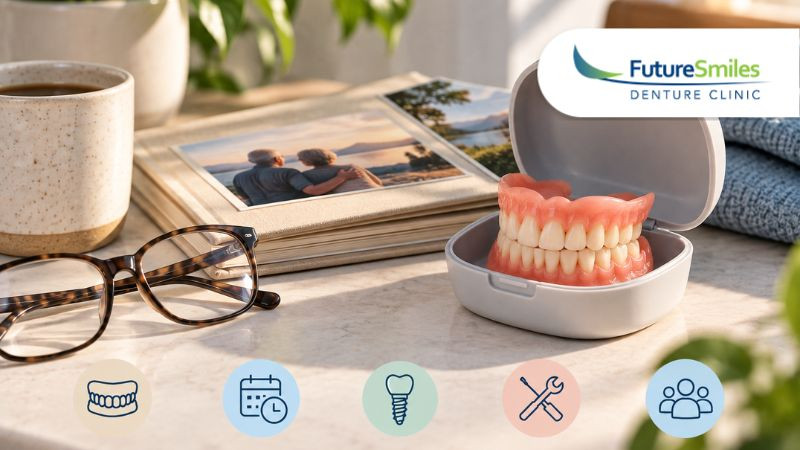

WHAT ARE FULL DENTURES AND HOW THEY WORK
Full dentures, also known as complete dentures, are removable appliances designed to replace an entire arch of missing teeth. They can be created for the upper jaw, lower jaw, or both, depending on a patient’s needs. Each set is custom-made to match the shape of the gums and jaw, which helps improve both appearance and function.
Modern full dentures are designed with materials that closely resemble natural teeth and gum tissue. This makes them look more realistic while also providing greater comfort. When properly fitted, they support everyday activities such as chewing, speaking, and smiling without hesitation.
Unlike partial dentures, which are used when some natural teeth remain, full dentures are recommended when all teeth are missing or need to be removed. They rest along the gum line and rely on precise fitting and natural suction for stability. Over time, most patients adapt well and are able to return to normal routines with confidence.
Full dentures also play an important role in supporting facial structure. Tooth loss can cause the face to appear sunken or aged, but dentures help restore balance by filling out the natural contours of the mouth and jaw. This not only improves appearance but can also contribute to overall confidence in social situations.
SIGNS YOU MAY NEED FULL DENTURES SOON
Full dentures are typically recommended for individuals who have lost most or all of their natural teeth, or for those whose remaining teeth are no longer healthy enough to maintain. Tooth loss can occur gradually over time or result from specific conditions that affect oral health.
Common reasons people may need full dentures include severe tooth decay, advanced gum disease, or significant damage caused by wear or injury. In many cases, patients may still have some natural teeth, but those teeth may be unstable, painful, or unlikely to last. Removing them and transitioning to full dentures can provide a more stable and long-term solution.
People who struggle with frequent dental issues often find that full dentures reduce ongoing discomfort. Instead of managing repeated treatments, dentures offer a way to reset oral health and focus on maintaining a consistent and manageable routine.
There are also functional signs that may indicate it is time to consider full dentures. Difficulty chewing, avoiding certain foods, or changes in speech can all point to declining dental health. Some individuals also notice changes in facial shape or jaw alignment, which can occur when teeth are no longer providing proper support.
Making the decision to move forward with full dentures is not only about replacing teeth, but also about improving the quality of life. With the right fit and guidance, patients are often able to regain comfort and confidence in their daily routines.
WHAT TO EXPECT WHEN GETTING FULL DENTURES
The process of getting full dentures is designed to ensure a secure fit and a natural result. It begins with a consultation, where your oral health is assessed, and your goals are discussed. This step is important for determining whether full dentures are the best option and for planning the next stages of treatment.
If extractions are required, they are completed before the dentures are finalized. In some cases, temporary dentures may be provided so you are not without teeth during the healing period. As the gums settle, adjustments are made to ensure the final dentures fit properly.
Custom impressions are taken to create dentures that match your mouth and bite. These impressions guide the design process, allowing for a more precise and comfortable fit. Once the dentures are ready, fittings are completed and small adjustments are made to improve stability and comfort.
There is always an adjustment period when first wearing dentures. Speaking and eating may feel different at first, but this improves with time and practice. Following care instructions and attending follow-up visits can make this transition smoother.
Caring for full dentures is essential for long-term success. Daily cleaning helps maintain hygiene and prevents buildup, while proper storage protects their shape when not in use. Regular check-ups are also important, as the mouth can change over time, which may affect how dentures fit.
With proper care and support, full dentures can provide a dependable solution for restoring both function and appearance. Many patients find that once they adjust, dentures become a natural and comfortable part of their daily routine.
Full dentures offer a practical and reliable way to restore comfort, function, and confidence after significant tooth loss. Understanding when they are needed and what to expect can help you make a clear and informed decision about your oral health.
At Future Smiles Denture Clinic, we focus on creating custom solutions that feel natural and support long-term comfort. If you are experiencing ongoing dental challenges or are considering full dentures, contact us today to book a consultation and take the next step toward a more confident smile.
FAQs
Q: WHAT IS THE DIFFERENCE BETWEEN FULL DENTURES AND PARTIAL DENTURES
A: Full dentures replace all teeth in an upper or lower arch, while partial dentures are used when some natural teeth are still present. Partial dentures rely on existing teeth for support, whereas full dentures rest along the gums. The choice depends on how many teeth remain and the overall condition of your oral health.
Q: HOW LONG DOES IT TAKE TO ADJUST TO FULL DENTURES
A: Most people need a few weeks to adjust to full dentures. During this time, speaking and eating may feel slightly unfamiliar. Minor soreness can also occur as the mouth adapts. With consistent use and proper adjustments, dentures begin to feel more natural and comfortable.
Q: HOW DO YOU KNOW IF FULL DENTURES ARE THE RIGHT OPTION
A: A professional evaluation is the best way to determine if full dentures are the right solution. Factors such as the number of missing teeth, overall oral health, and long term goals are all considered. If remaining teeth are not stable or are causing ongoing issues, full dentures may provide a more reliable and lasting outcome.

.jpg "What Happens During Your Very First Visit to a Denturist?")