WHY IMPLANT DENTURES COST MORE
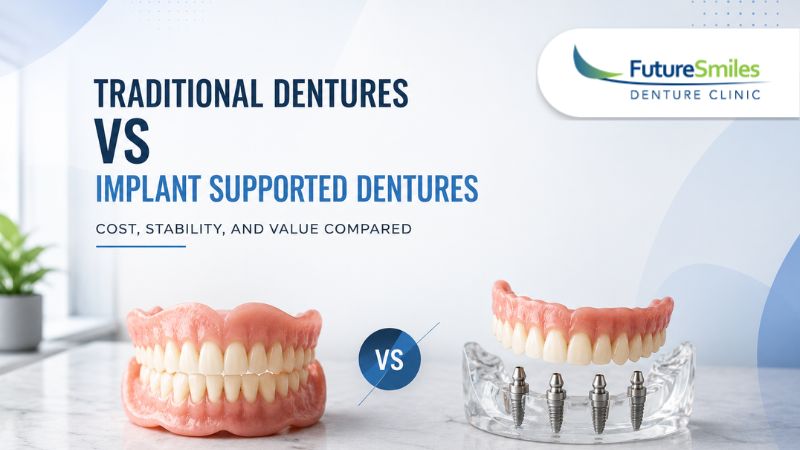
Traditional dentures and implant-supported dentures both replace missing teeth, but the way they are supported is very different. This difference is one of the main reasons their costs can vary considerably.
A traditional full denture is a removable appliance that rests directly on the gums. The treatment process generally includes an assessment, impressions, bite measurements, tooth selection, trial fittings, fabrication, insertion, and follow-up adjustments. No dental implants need to be surgically placed.
Implant-supported dentures require additional treatment. Dental implants must first be planned and surgically positioned within the jawbone. After placement, a healing period is generally required before the implants can provide support for the final denture.
Specialized components are then needed to connect the denture to the implants.
The overall cost may therefore include several different parts:
- Initial consultations and assessments
- Diagnostic imaging
- Implant treatment planning
- Surgical implant placement
- Implant components and attachments
- Additional procedures when required
- Denture design and fabrication
- Follow-up appointments
- Adjustments after treatment
- Long-term maintenance
The number of implants required can have a major impact on the final price. Different implant denture designs use different numbers and arrangements of implants. The appropriate configuration depends on the patient's anatomy, treatment goals, and the type of restoration being created.
Jawbone condition can also affect cost. Dental implants need an appropriate amount and quality of bone for support. When teeth have been missing for a long time, the jawbone may have changed considerably. Some patients may require additional procedures before implants can be placed, which can add another stage to treatment.
The type of restoration matters as well. A removable implant-retained denture and a more fixed implant-supported restoration are not the same treatment. Materials, components, laboratory work, and clinical requirements can vary considerably between options.
Traditional dentures have fewer surgical and restorative stages, which generally makes their initial cost lower. However, they still involve professional customization. A quality denture is not simply a set of replacement teeth. Its design must consider the patient's mouth, bite, facial support, appearance, speech, and chewing function.
The final cost of traditional dentures can vary according to:
- Whether one or both arches are being treated
- The type of denture selected
- Materials used
- Whether extractions are required
- Whether immediate dentures are needed
- The complexity of the bite
- Future adjustments and relines
- Repair or replacement requirements
For this reason, comparing implant-supported dentures with traditional dentures based on a single advertised number can be misleading. Patients should understand exactly what is included in an estimate and what additional treatment may be required.
COMPARING COST AND LONG-TERM VALUE
The lower initial cost of traditional dentures makes them an appropriate and practical option for many patients. They can replace an entire arch of teeth without requiring implant surgery and can provide years of function when properly designed, maintained, and adjusted.
Traditional dentures also have ongoing maintenance requirements. The mouth naturally changes after tooth loss, and these changes can gradually affect the fit of the appliance.
A patient may eventually require:
- Denture adjustments
- Professional relines
- Denture repairs
- Rebasing
- Replacement dentures
- Routine oral tissue assessments
A reline can often restore the fit of a denture when changes in the gums have created space underneath it. If the denture becomes excessively worn or no longer provides adequate support, replacement may eventually become necessary.
Implant-supported dentures have their own maintenance requirements. While implants can provide additional stability, neither the denture nor its attachment components should be considered maintenance free.
Attachments that connect a removable denture to the implants can wear with repeated use. Depending on the system, components may eventually require replacement to maintain proper retention.
The denture itself can also experience everyday wear. Artificial teeth can wear down, acrylic can become damaged, and changes in the mouth can still affect comfort and function.
Long-term care may involve:
- Professional implant assessments
- Cleaning around implant components
- Replacement of worn attachments
- Denture adjustments
- Repairs when necessary
- Maintenance of the denture base and teeth
- Eventual denture replacement
This is why value should be considered alongside the initial treatment price.
For someone who functions comfortably with a conventional denture, paying substantially more for implant support may not provide enough additional benefit to justify the investment. Traditional dentures can remain a very effective treatment for patients who are satisfied with their fit and function.
For another patient, stability may be a major concern. Someone who has repeatedly struggled with a moving lower denture, difficulty chewing, or dependence on adhesive may place much greater value on the additional retention that implants can provide.
Potential benefits of implant support may include:
- Greater denture stability
- Reduced movement during meals
- More confidence while speaking
- Less reliance on adhesive
- Improved control of a lower denture
- Greater confidence in social situations
These benefits are difficult to measure purely in dollars because they affect everyday quality of life.
Treatment time should also be considered part of the comparison. Traditional dentures generally follow a more straightforward process, while implant treatment may require surgery followed by a healing period before the final restoration is completed.
Patients need to consider whether they are comfortable with this additional treatment time and whether the potential improvements are important enough to them to pursue a more involved option.
There may also be a middle ground. Someone experiencing problems with traditional dentures does not necessarily need to move immediately to implants.
Before considering implant treatment, the existing dentures should be professionally assessed. If they have simply become loose because the gums have changed, a reline may restore the fit at a considerably lower cost.
Likewise, an old and worn denture may simply need replacement.
The goal should be to choose the least complicated treatment that effectively addresses the patient's needs while considering long-term comfort, function, and budget.
WHAT DETERMINES YOUR FINAL COST
There is no single price that accurately represents implant-supported denture treatment for every patient. Individual anatomy and treatment requirements can create substantial differences between treatment plans.
One of the biggest variables is the number of implants being used. Some removable implant dentures may use fewer implants, while other restorations require additional support. The treatment team determines the appropriate configuration after evaluating the jaw and planned restoration.
The condition of the jawbone is another important factor. After teeth are removed, bone can gradually shrink. The amount of bone remaining can influence implant placement and whether additional treatment needs to be considered.
Diagnostic imaging helps the treatment team understand the structure of the jaw and plan implant placement more accurately.
The type of denture selected also affects pricing. Patients may hear terms such as implant retained, implant-supported, removable, fixed, snap-in, or full-arch restoration. These terms can describe different treatment approaches, and their costs should not be assumed to be interchangeable.
When comparing estimates, ask what is actually included.
Important questions may include:
- How many implants are included?
- Is the denture itself included in the estimate?
- Are diagnostic images included?
- Are surgical fees included?
- Are attachment components included?
- Are follow-up adjustments included?
- What maintenance will be required?
- What costs may arise later?
- Is the restoration removable or fixed?
- What happens if an attachment wears out?
Asking these questions can make it easier to compare treatment options accurately rather than choosing based solely on the lowest quoted price.
Insurance or dental benefit programs may also affect out-of-pocket costs depending on the patient's eligibility and the specific treatment. Coverage can vary significantly, particularly when implant-related procedures are involved. Patients should confirm their individual benefits rather than assuming a particular treatment will be covered.
Traditional dentures also vary in price based on the type of appliance and treatment required. Immediate dentures, for example, involve different planning than conventional dentures created after the gums have healed.
Patients requiring both upper and lower dentures will also have a different treatment plan from someone replacing only one arch.
The best way to determine your actual cost is through a personalized consultation. This allows the condition of your mouth and existing dentures to be evaluated before recommendations are made.
If you already wear dentures, bring them to your appointment. Your denturist can assess their fit, age, bite, and overall condition. Sometimes a patient's concerns can be resolved through a reline or adjustment rather than replacing the dentures or moving to implant treatment.
If implant support appears appropriate, additional assessment can determine whether you may be a candidate and what treatment stages would be required.
Cost should ultimately be viewed alongside four important factors:
- Comfort: How well does the option meet your everyday needs?
- Function: Will it provide the stability you need for eating and speaking?
- Maintenance: What professional and at-home care will be required?
- Longevity: What future adjustments, repairs, or replacements should you anticipate?
There is no universally better option simply because one treatment costs more. Traditional dentures continue to provide reliable tooth replacement for many patients. Implant-supported dentures offer additional stability that may be particularly valuable for people who struggle with conventional denture retention.
Understanding what you are paying for, what the treatment involves, and what ongoing care will be necessary makes it easier to choose an option based on overall value rather than price alone.
Traditional dentures generally have a lower initial cost, while implant-supported dentures require a larger investment because of implant surgery, specialized components, and additional treatment stages. The right choice depends on more than the upfront price. Stability, comfort, oral health, maintenance requirements, and your long-term expectations should all be considered.
At Future Smiles Denture Clinic, we can assess your current situation, explain the differences between traditional and implant-supported options, and help you understand which approach may be appropriate for your needs. Contact our team to schedule a consultation and receive personalized information about your denture options and expected costs.
FAQs
Q: HOW MUCH MORE DO IMPLANT DENTURES COST?
A: Implant-supported dentures generally cost more than traditional dentures because the treatment includes surgical implant placement, specialized components, additional planning, and the denture restoration itself. The difference varies considerably depending on the number of implants, restoration type, jawbone condition, and additional procedures required. A personalized assessment is necessary for accurate pricing.
Q: ARE IMPLANT DENTURES WORTH THE EXTRA COST?
A: For some patients, the additional stability and reduced denture movement can make implant support a worthwhile investment. Others function comfortably with conventional dentures and may not need implant treatment. The value depends on your current concerns, desired level of stability, oral health, budget, and treatment goals.
Q: IS THERE A CHEAPER WAY TO FIX LOOSE DENTURES?
A: Often, yes. A loose denture does not automatically mean you need implants or a completely new appliance. Depending on its age and condition, a professional adjustment or denture reline may restore a more secure fit. Having your existing dentures assessed first can help determine the most appropriate and cost-effective solution.

.jpg "What Happens During Your Very First Visit to a Denturist?")