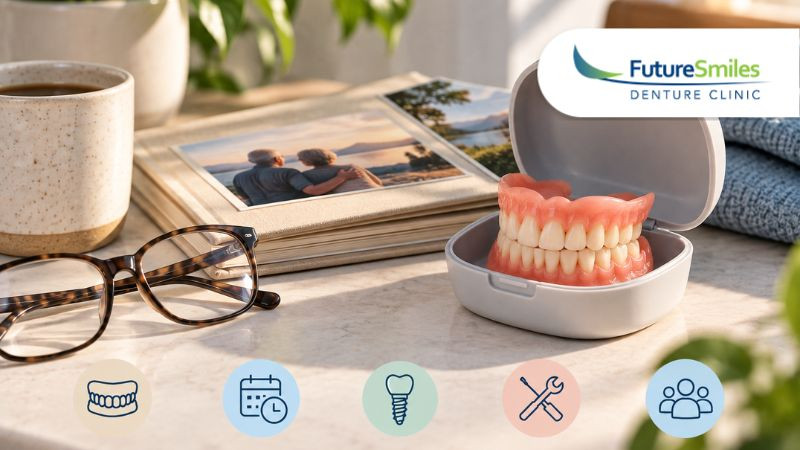

HOW FULL DENTURES AND IMPLANTS DIFFER
Full dentures are removable appliances designed to replace an entire arch of missing teeth. They rest along the gums and are custom-fitted to provide support for daily functions such as eating and speaking. Their design focuses on restoring both appearance and basic function without the need for surgical procedures.
Implant-supported options take a different approach. Dental implants are placed in the jawbone and serve as anchors that hold a denture in place. Instead of relying solely on the gums for stability, the denture connects to these implants, which can improve its security during use.
One of the main differences between these options is how they stay in place. Traditional dentures rely on fit and natural suction, while implant-supported solutions use physical attachment points. This often results in a more stable experience for certain patients.
Another key difference is the treatment process. Full dentures can typically be completed without surgery, making them more accessible for many individuals. Implant-supported options require additional steps, including surgical placement and healing time before the final denture is secured.
Both options are designed to replace missing teeth effectively, but they offer different levels of stability, commitment, and treatment complexity. Understanding these differences helps set clear expectations from the start.
COMPARING COMFORT AND DAILY FUNCTION
Comfort and stability are often the biggest factors when choosing between full dentures and implant-supported solutions. Traditional dentures can provide reliable function when properly fitted, but they may shift slightly during eating or speaking, especially in the lower arch.
Implant-supported options are designed to reduce movement. Because they are anchored in place, they tend to feel more secure during daily activities. This added stability can make it easier to eat certain foods and speak with confidence.
That said, comfort is not only about stability. Some patients prefer the simplicity of removable dentures, especially if they want a non-surgical option. Others value the secure feel of implants and are willing to go through a longer process to achieve that result.
Maintenance also plays a role in daily function. Removable dentures are taken out for cleaning, which allows for a straightforward hygiene routine. Implant-supported options still require cleaning, but the process can vary depending on the type of attachment used.
Lifestyle and expectations should guide this decision. Patients who prioritize simplicity and flexibility may lean toward full dentures, while those seeking a more fixed and stable feel may consider implant-supported solutions.
HOW TO CHOOSE THE RIGHT OPTION FOR YOU
Choosing between full dentures and implant-supported options depends on several factors, including oral health, personal preferences, and long-term goals. A detailed evaluation is the best way to determine which approach is most suitable.
Bone health is an important consideration. Implant-supported options require enough bone structure to support the implants. If bone levels are not sufficient, additional procedures may be needed before implants can be placed.
Budget and timeline also influence the decision. Full dentures are generally more straightforward and can be completed in a shorter period. Implant-supported options involve multiple stages and may take longer to complete due to healing time.
Comfort with surgical procedures is another factor. Some patients prefer to avoid surgery and choose removable dentures for that reason. Others are open to implants if it means gaining additional stability and confidence.
It is also important to think about long-term expectations. Both options can provide reliable results, but they offer different experiences in terms of maintenance, feel, and daily use. Taking time to weigh these factors helps ensure the final decision aligns with your lifestyle.
Working with a professional allows you to explore each option in detail. With the right guidance, you can move forward with a solution that supports both comfort and confidence.
Full dentures and implant-supported options both offer effective ways to restore function, comfort, and confidence. Understanding how they differ allows you to make a more informed decision based on your needs and expectations.
At Future Smiles Denture Clinic, we help patients explore their options and choose solutions that feel natural and reliable. If you are deciding between full dentures and implant-supported alternatives, contact us today to book a consultation and take the next step toward a confident smile.
FAQs
Q: WHAT IS THE MAIN DIFFERENCE BETWEEN FULL DENTURES AND IMPLANT-SUPPORTED OPTIONS
A: Full dentures are removable and rest on the gums, while implant-supported options are secured using implants placed in the jaw. This creates a more stable fit, but also requires a more involved treatment process. The choice depends on comfort, stability needs, and personal preferences.
Q: ARE IMPLANT-SUPPORTED OPTIONS ALWAYS BETTER THAN FULL DENTURES
A: Implant-supported options are not always better for every patient. While they offer improved stability, they also require surgery and a longer treatment timeline. Full dentures remain a reliable and effective solution for many individuals, especially those looking for a simpler approach.
Q: HOW DO I KNOW WHICH OPTION IS RIGHT FOR ME
A: The best way to decide is through a professional evaluation. Factors such as bone health, lifestyle, budget, and long-term goals are all considered. A consultation helps determine which option will provide the most comfortable and practical outcome for your situation.

.jpg "What Happens During Your Very First Visit to a Denturist?")