Not All Dentures Feel the Same
When it comes to replacing missing teeth, traditional dentures have been the standard for decades—but they’re no longer your only option. Flexible dentures are growing in popularity among patients who want a more natural-feeling, lightweight alternative.
At Future Smiles Denture Clinic, we offer both traditional acrylic dentures and flexible partial dentures. Each type has its advantages depending on your needs, and our team can help you decide which option fits your lifestyle and your smile.
What Are Traditional Dentures?
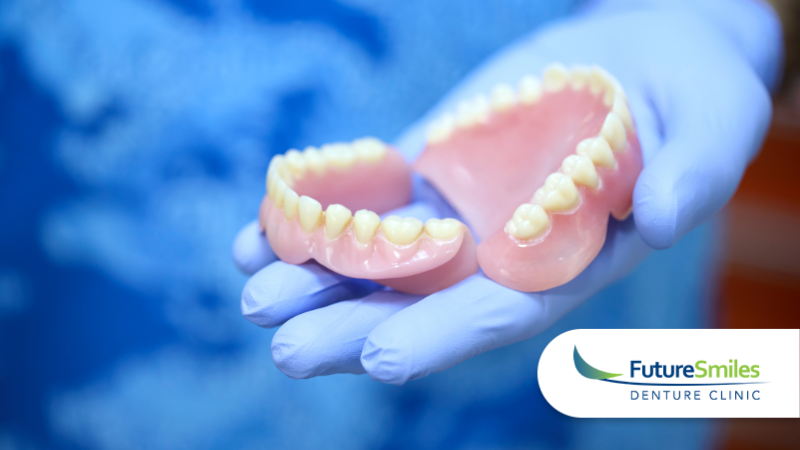
Traditional dentures are made of rigid acrylic resin. They’re durable, widely used, and cost-effective—especially for full denture cases or long-term wear. These dentures may also include metal clasps when used for partials.
Pros of Traditional Dentures:
- Proven, long-lasting materials
- More stable for full-arch replacements
- Often lower upfront cost
- Covered under many dental benefit plans, including CDCP
Potential Drawbacks:
- Can feel bulky or rigid
- May irritate gums over time
- Metal clasps may be visible in partials
What Are Flexible Dentures?
Flexible dentures are made of a soft, lightweight nylon-based material that adapts to your mouth. These are often used for partial dentures and patients with sensitive gums or gag reflexes.
Pros of Flexible Dentures:
- No metal clasps—better aesthetics
- Softer and more comfortable
- Less likely to cause pressure sores
- More adaptable for sensitive mouths
Potential Drawbacks:
- May not be ideal for full-arch dentures
- Can be harder to repair or adjust
- Often slightly more expensive than traditional acrylic
Which Denture Type Is Right for You?
Here’s a general guideline to help you decide:
You may prefer traditional dentures if:
- You need a full upper or lower denture
- You want a long-lasting and cost-effective solution
- You’re eligible for full coverage through CDCP or other plans
You may prefer flexible dentures if:
- You have a strong gag reflex or sensitive gums
- You want a more natural look with no visible clasps
- You’re replacing only a few missing teeth and want added comfort
Still not sure? That’s what we’re here for. Every smile is different, and our team will guide you through the options with a personalized fit assessment.
Let’s Find the Denture That Feels Right for You
Choosing the right denture is about more than appearance; it’s about comfort, stability, and confidence. At Future Smiles Denture Clinic in Calgary, we’ll help you compare flexible and traditional dentures side-by-side to find the best fit for your needs and your lifestyle.
Contact us today to book your denture consultation at one of our two Calgary locations.
FAQs:
Q: What’s the difference between flexible and traditional dentures?
A: Traditional dentures are rigid acrylic; flexible dentures use a softer, nylon-based material that adapts to your mouth. Contact Future Smiles Denture Clinic to schedule a consultation and we will help find out which dentures are right for you.
Q: Are flexible dentures more comfortable?
A: Yes—many patients find them softer and less irritating, especially for partials or first-time wearers.
Q: Can flexible dentures replace all my teeth?
A: Flexible dentures are usually used for partial cases. Full dentures are typically made with rigid acrylic for long-term support.

.jpg "How to Care for Full Dentures for Long Term Comfort – Full Dentures Calgary")