COMPLETE DENTURES AND WHEN THEY ARE USED
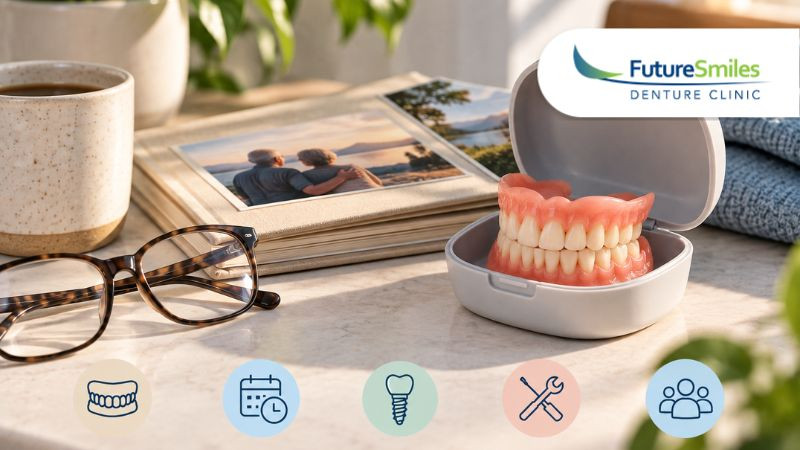
Complete dentures are designed to replace all teeth in either the upper or lower jaw. They are typically recommended when a patient no longer has any natural teeth remaining in an arch. The denture sits on top of the gums and is carefully shaped to match the natural structure of the mouth.
These dentures are made from durable acrylic materials with artificial teeth that are designed to resemble natural teeth in colour and shape. The base supports the lips and cheeks while restoring the ability to chew and speak.
Complete dentures are often used when extensive tooth loss has occurred due to advanced gum disease, severe tooth decay, trauma, or long-term dental complications. When no natural teeth remain to support a restoration, a full denture can provide a reliable replacement.
Patients may also receive complete dentures following tooth extractions when remaining teeth can no longer be restored. In some cases, immediate dentures are placed soon after extractions so patients are not left without teeth during the healing process.
Because the jawbone gradually changes over time after tooth loss, dentures may require periodic adjustments or relining. These refinements help maintain comfort and stability as the shape of the gums changes.
With proper care and regular follow-up appointments, complete dentures can provide long-term support for everyday activities such as eating, speaking, and maintaining facial structure.
PARTIAL DENTURES AND HOW THEY WORK
Partial dentures are used when some natural teeth are still present. Instead of replacing an entire arch, they fill the spaces where teeth are missing while working around the remaining natural teeth.
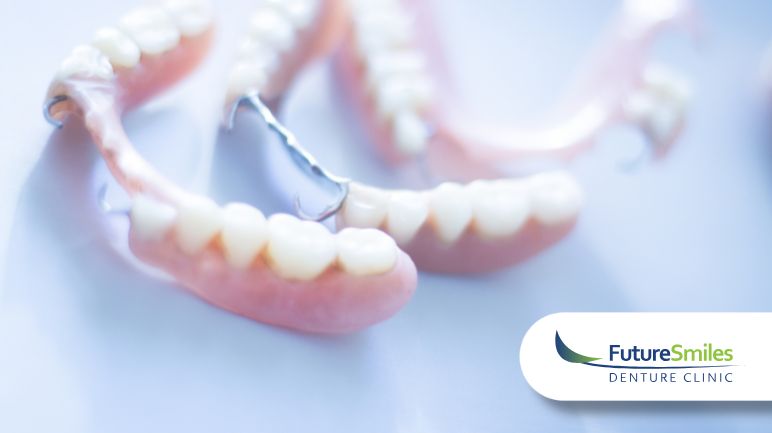
A partial denture typically includes a gum-coloured base and replacement teeth that attach to a lightweight metal or acrylic framework. Small clasps or connectors help secure the denture to the remaining teeth for stability.
One of the main benefits of partial dentures is that they help maintain the alignment of natural teeth. When gaps remain untreated, neighbouring teeth may shift or tilt into the open space, which can affect the bite and overall dental health.
Partial dentures also restore chewing ability and improve the appearance of the smile. Because natural teeth are still present, they often provide additional support and stability for the denture appliance.
This option is commonly recommended for patients who have lost several teeth but still maintain healthy natural teeth that can remain in place. Preserving natural teeth whenever possible is usually beneficial for maintaining jawbone structure and oral function.
Dental professionals evaluate the condition of the remaining teeth and gums before recommending a partial denture. Proper fit and design are essential to ensure comfort and long-term function.
CHOOSING BETWEEN COMPLETE AND PARTIAL DENTURES
The decision between complete dentures and partial dentures depends largely on the number of teeth remaining and their overall health.
If all teeth in an arch are missing or require removal, a complete denture is usually the most appropriate solution. When some healthy teeth remain, a partial denture may help restore the missing areas while preserving the remaining teeth.
Other factors may influence the decision as well. Jawbone health, gum condition, and bite alignment are important considerations when determining the best treatment approach.
Some patients may initially receive partial dentures but later transition to complete dentures if additional teeth are lost over time. Others may maintain partial dentures for many years with proper oral care and routine dental monitoring.
A denture consultation provides a thorough evaluation of the mouth, allowing dental professionals to recommend the most appropriate option based on individual needs and long-term oral health goals.
Understanding the differences between these two solutions allows patients to feel more confident about their treatment choices and expectations.
BENEFITS OF REPLACING MISSING TEETH
Replacing missing teeth provides several important health and lifestyle benefits. One of the most immediate advantages is improved chewing ability, which allows patients to enjoy a wider variety of foods and maintain balanced nutrition.
Speech clarity may also improve when missing teeth are replaced. Teeth play a key role in forming certain sounds, and dentures help restore proper tongue placement and airflow during speech.
Another benefit is facial support. Missing teeth can cause the cheeks and lips to lose support, leading to a sunken or aged appearance. Dentures help restore the natural shape of the face by supporting the surrounding tissues.
Replacing missing teeth also helps maintain oral alignment. When gaps remain untreated, nearby teeth may shift or rotate over time, which can affect the bite and increase the risk of additional dental problems.
For many patients, dentures also improve confidence when smiling, speaking, and interacting with others. Restoring the appearance of a full smile often has a positive impact on daily comfort and overall well-being.
FAQs
Q: What is the main difference between complete and partial dentures?
A: Complete dentures replace all teeth in an arch, while partial dentures replace only the missing teeth when some natural teeth remain. The choice depends on the number and condition of the remaining teeth.
Q: Are partial dentures more stable than complete dentures?
A: Partial dentures can sometimes feel more stable because they attach to existing teeth for support. Complete dentures rely on suction and the shape of the gums for stability.
Q: Can someone switch from partial dentures to complete dentures later?
A: Yes. If additional teeth are lost or removed over time, patients may transition from partial dentures to complete dentures to restore the full arch.

.jpg "What Happens During Your Very First Visit to a Denturist?")